

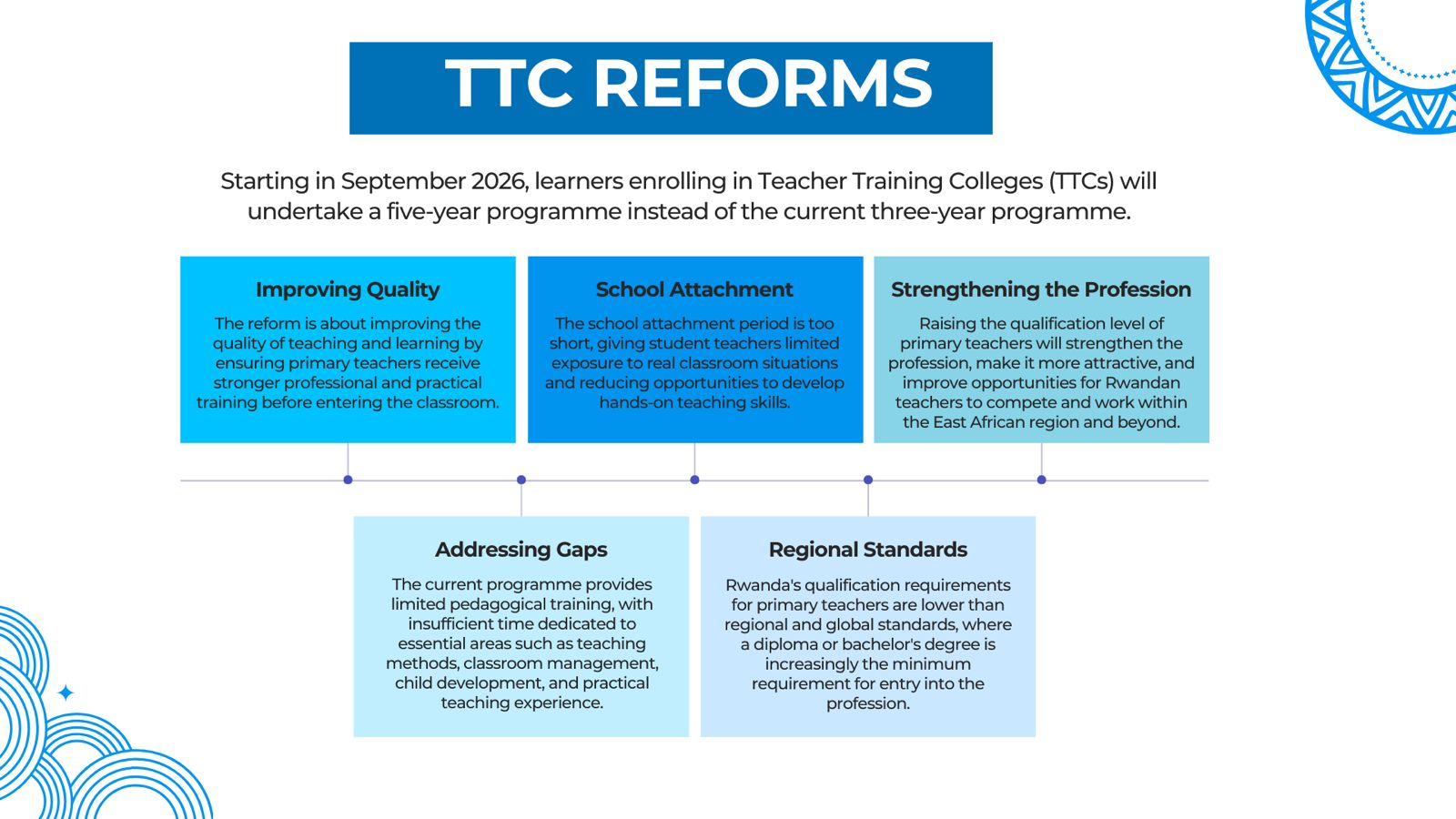
Rwanda is set to overhaul how it prepares primary school teachers, with the Minister of Education, Joseph Nsengimana, announcing sweeping reforms to Teacher Training Colleges (TTCs) during a conversation on RBA's platforms. Starting in September 2026, students enrolling in TTCs will undertake a five-year programme, up from the current three years — a move the Ministry says will produce better-prepared teachers and, ultimately, improve learning outcomes for children across the country.
Why the Change
The reform responds to gaps identified in the existing training model. According to the Ministry, the current three-year programme leaves too little room for essential pedagogical content — including teaching methods, classroom management, child development, and hands-on teaching practice. Student teachers also spend a comparatively short period on school attachment, limiting their exposure to real classroom situations and their opportunity to build practical teaching skills before starting their careers.
There is also a regional dimension to the decision. Rwanda's current qualification requirements for primary teachers lag behind regional and global standards, where a diploma or bachelor's degree is increasingly becoming the baseline for entry into the profession. Extending the training period is intended to close that gap and align Rwanda more closely with international norms.
What the Reform Aims to Achieve
The Ministry has outlined four main objectives behind the extended programme:
- Improving Quality: By lengthening training, the reform seeks to give future teachers stronger professional and practical preparation before they step into the classroom.
- Expanding School Attachment: A longer programme allows for more extensive, immersive school placements, giving trainees deeper exposure to real teaching environments and more time to develop practical classroom skills.
- Strengthening the Profession: Raising the qualification level of primary teachers is expected to make the profession more attractive and improve the ability of Rwandan teachers to compete for opportunities within the East African region and beyond.
- Meeting Regional Standards: The change brings Rwanda's teacher qualification requirements closer in line with regional and global benchmarks.
The five-year programme will apply to learners newly enrolling in TTCs from September 2026. By combining stronger pedagogical grounding with significantly more practical classroom experience, the Ministry expects the reform to produce a new generation of teachers who are more confident, better skilled, and more effective in the classroom — ultimately translating into improved learning outcomes for Rwandan children.
The announcement has sparked discussion among educators and stakeholders, many of whom see it as a long-overdue step toward professionalizing teaching and raising the status of the field nationally and regionally.
Post a Comment