

The Government of Rwanda is adjusting how it funds school feeding programmes, with the Minister of Education, Joseph Nsengimana, announcing that both the capitation grant and government contributions to school feeding will now be pegged to the Consumer Price Index (CPI). Alongside this, the Ministry of Education has revised the parents' contribution rates for school feeding, with the new figures taking effect from January 2027 (Term 2).
The announcement, shared via the Ministry of Education's official channels, is part of a broader effort to keep education financing responsive to rising costs of living and ensure schools have adequate resources to sustain feeding programmes for learners.
New Parents' Contribution Rates
Under the revised structure, parents' contributions to school feeding will increase across all school categories:
School Type | Current Contribution | New Contribution |
Pre-primary & Primary Schools | Frw 975 | Frw 2,000 |
Day Secondary Schools | Frw 19,500 | Frw 24,000 |
Boarding Secondary Schools | Frw 85,000 | Frw 110,000 |
The new rates take effect from January 2027 (Term 2), giving parents and schools a transition period before implementation begins.
Capitation Grant Linked to Consumer Price Index
Beyond the revised parents' contributions, the Ministry confirmed that the government's capitation grant — the per-student funding allocated to schools — along with its contribution to school feeding, will be adjusted in line with the overall Consumer Price Index (CPI). This means future funding levels will move with inflation, helping schools keep pace with the real cost of feeding and supporting students rather than relying on fixed, static figures.
Why It Matters
School feeding programmes play a central role in supporting learner attendance, concentration, and overall wellbeing, particularly in pre-primary, primary, and secondary schools across Rwanda. By tying both the capitation grant and parents' contributions to inflation trends, the Ministry of Education aims to build a more sustainable financing model — one that protects the quality and consistency of school feeding as living costs rise, without leaving schools underfunded.
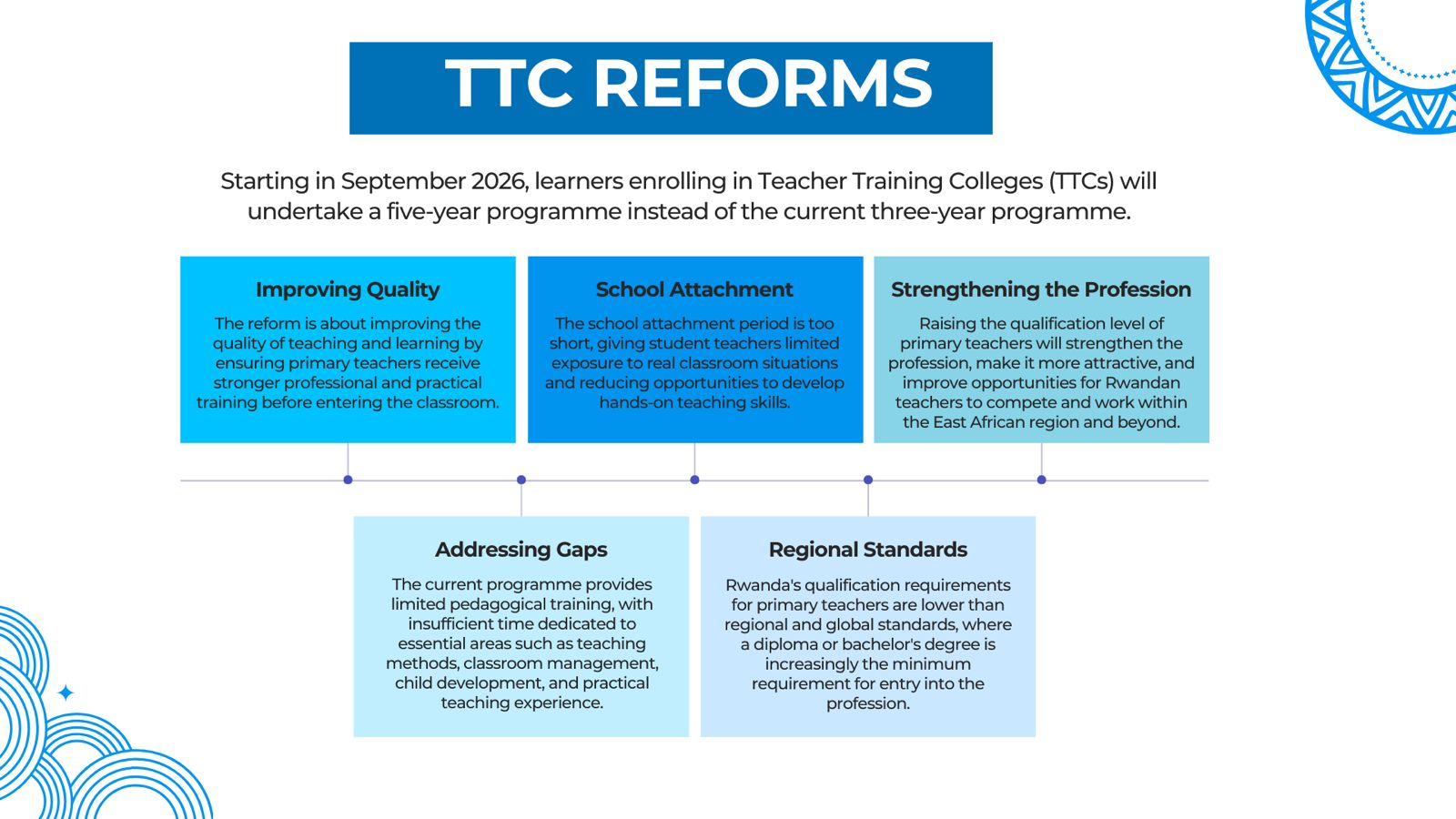
The move follows closely on the heels of the Ministry's announcement of major Teacher Training College (TTC) reforms, signaling a period of significant policy change aimed at strengthening Rwanda's education system from both the teaching and financing sides.

Post a Comment